


Beer: positive aspects
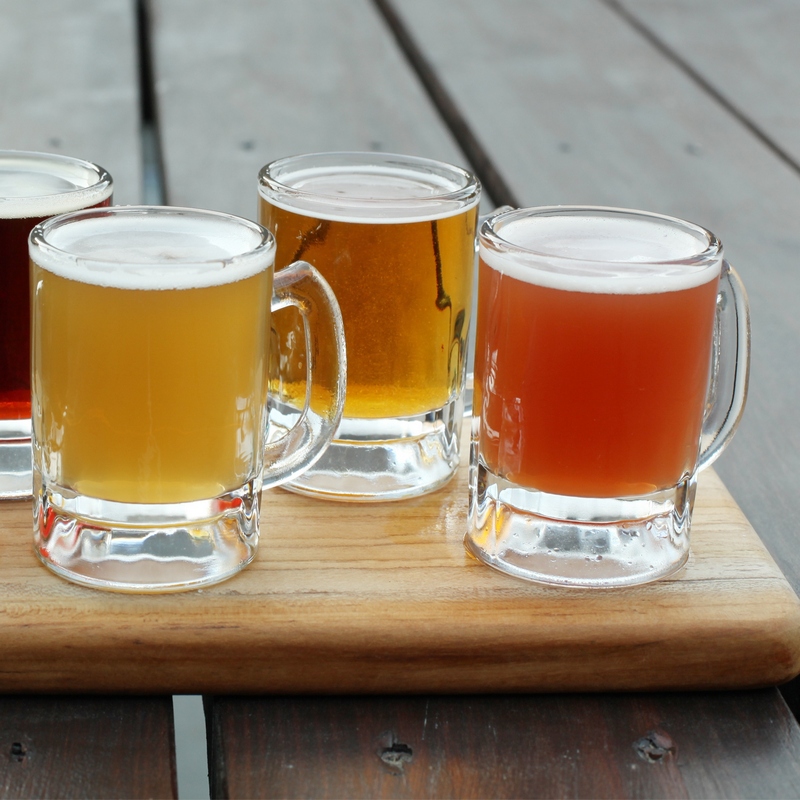
Without a doubt, many people love beer, and with the current choice of fans of this drink, there are more and more. If you believe the statistics, about 27 liters per capita are consumed in Russia per year. And this, as you might guess, is not the limit. The Germans, for example, drink 127.4 liters per person per year. The leaders in beer consumption are the Czechs. They drink «only» 161.4 liters per year. Of course, we will not soon reach these figures, but we are trying our best. For the retail network in Russia, beer is one of the most profitable products today.
So, what is beer?
Speaking in the language of officials (GOST of the Russian Federation), beer is a low-alcohol, carbon dioxide-saturated foamy drink obtained by fermenting hopped malt wort with brewer's yeast. Historically, it has been divided into three groups by type of fermentation: bottom, top and spontaneous. More than 90% of the consumed drink belongs to the first category. The second and third are for gourmets, who have also begun to appear in our country. Each group has its own subspecies. But we will discuss this topic a little later (more details in the section "Beer Styles").
Beer is a sparkling, refreshing drink with a characteristic hop aroma and a pleasant bitter taste. It quenches thirst, increases the overall tone of the body, and promotes a more correct metabolism, as it contains vitamins B1, B2, B6, H, PP. Beer contains approximately 90% water, 5% carbohydrates, 4.5 by volume (or 3.6 by weight) % alcohol and a small amount of carbon dioxide, proteins and mineral salts.
It is believed that the largest number of beer varieties is in Germany. In fact, everything is somewhat different - Germany is only the leader in the number of breweries, but not in the number of varieties. Here it is far ahead of Belgium with its many small monasteries, each of which has been brewing several varieties since the Middle Ages (according to various sources - from the 10th to the 13th centuries). In addition, the Belgians were the first to experiment with adding various additives to beer: blackberry juice, cherries, herbs, resins, etc.
In the new millennium, beer has not only not lost the positions it has won (and in the Middle Ages, beer was brewed in every village in Europe and Russia), but is also entering a new stage of its development. Today, the consumer has a huge choice among different varieties and brands of beer.
Similar events


